
Last week, I began a conversation on the dual role of communication and the importance of transforming the corporate communication team into an intelligence function. This week, we will stretch it a little further.
In recent years, ‘data is king’ has become a maxim in many corporate circles. However, in communication, we have always believed that ‘content is king’. With the evolution of the communication function, ‘data is the first king’ if ‘content must become a king’.
It is foolhardy for communication professionals to communicate regardless of the noise clutter without backing it up with data. This requires organisations to build a strong data culture and equip communication teams with the tools and capabilities to analyse and synthesise information in real time.
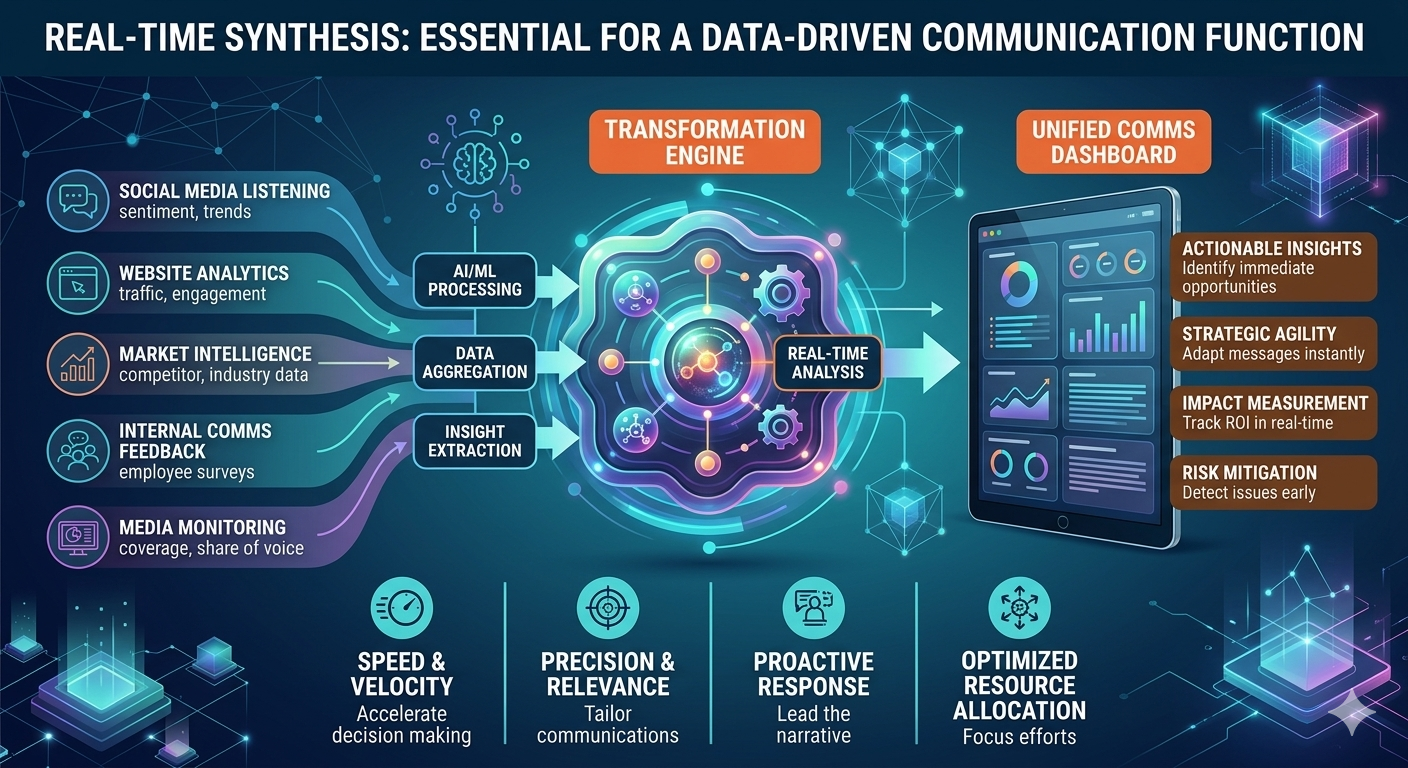
Real-Time Synthesis is the bridge between raw data and strategic action. This process transforms fragmented information into a cohesive understanding of the environment, enabling agile, accurate data-driven decision-making.
Data-driven decision-making is no longer optional; it is a competitive necessity. In a world of constant flux, being able to synthesise cultural and technological trends in real time is the ultimate competitive advantage, as well as connecting disparate data points, identifying patterns, and translating them into clear, actionable recommendations for organisational leaders who are expected to make faster, more informed decisions in an ever-increasing BANI environment.
For example, a sudden spike in social media conversations may indicate a reputational issue, but without context from customer service data, media coverage, or regulatory developments, it will be difficult to determine its true significance. Real-time synthesis ensures that decisions are based on a holistic understanding rather than isolated signals.
This intelligence function must embrace a multi-stakeholder approach. Organisations must recognise that the “world” they operate in is not defined by a single channel or audience. It is a complex ecosystem of interconnected stakeholders, such as investors, employees, regulators, and host communities. Each of these stakeholders is influencing and being influenced by different factors. Communicators must ensure that the organisation remains grounded, relevant, and proactive in its engagement.
A communication function that embraces this complexity can provide leadership with richer, more balanced insights. It can help answer key strategic questions such as:
- What are our stakeholders really saying and why?
- What risks are emerging beneath the surface?
- How might external developments impact our business decisions?
- Where are the opportunities we are not yet seeing?
Importantly, this approach also redefines the role of communication within the organisation. It moves from being a support function to a strategic advisor, one that sits at the intersection of business, data, and stakeholder insight.
To achieve this, organisations must invest in:
- Building analytical capabilities within communication teams
- Integrating data sources across departments
- Encouraging cross-functional collaboration
- Embedding insight-driven thinking into decision-making processes
The future of communication lies in its ability to bridge two worlds: the organisation and its external environment. It must not only project the organisation outward but also bring the outside world inward, sharpening strategy and strengthening resilience.
Today’s corporate hemisphere is defined by uncertainty and rapid change; organisations that treat communication as an intelligence function will be better equipped to anticipate challenges, seize opportunities, and make smarter decisions. Communication is not just about being heard; it is about understanding and helping the business understand what truly matters.
Olutayo Irantiola writes #PRQuotes weekly
Leave a Reply