
by
Olutayo IRANTIOLA
“If truly all the mountains that we have around today are from volcanic eruptions, then many lives would have been lost many millennia ago, before people could find fortresses in all the hills in recent times.”
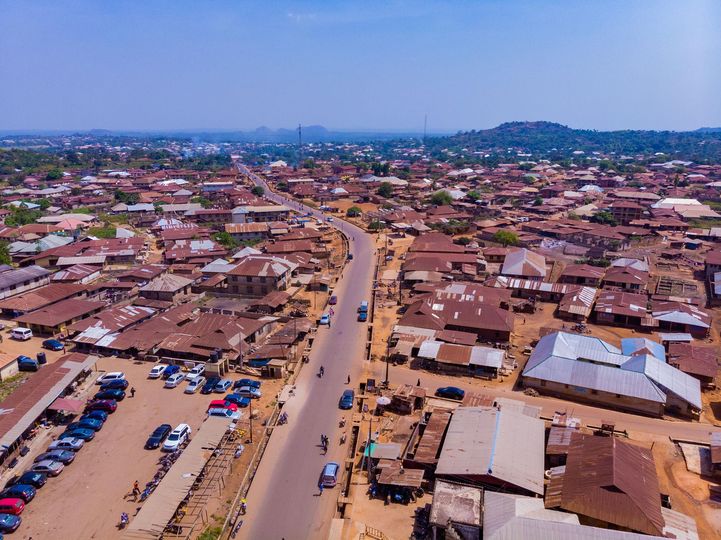
Getting to the Okeho-Iganna Grammar School junction, which leads to 4 different towns, could be a daunting task for a stranger. These roads lead to Iseyin, Imia, Ilero and Okeho main township- the headquarters of Kajola Local Government, one of the thirty-three local governments in Oyo State. The town is surrounded by hills, namely Olofin, Biayin, Eeyele, Okofori Alaapa, and Aho-Apa. Historically, the first resident in the community is called Olofin. After a while, a disgruntled crown prince from Ilaro, Ojo Oronna and his entourage came to settle by Olofin after leaving Ilaro so as to start his domain. Subsequently, the crown prince became the King of Ijo, and his progenies have been ruling in Okeho since then.
This agrarian community is a confederation of 11 different hamlets are Isia, Olele, Isemi, Imoba, Gbonje, Oke-Ogun, Ogan, Bode, Pamo, Alubo and Ijo, the host community. These hamlets came together to avert the widely feared Diahomey and Fulani invasions. The King of Ijo, then, Onjo Arilesire, invited all these hamlets, and they moved towards the mountain, Apara Nla, for their own security; this was when they arrived at the etymology of the town- Okeho. Interestingly, the dreaded invasion never came upon them. The head of the Ijo quarters was made the King of all the town, while all the heads of the hamlets became Baales (leaders of quarters). This traditional amalgamation is akin to the Nigerian story.
They lived in peace till the advent of the colonial masters, when various rules, such as the introduction of native courts and the digging of pit latrines, were imposed on the town, which made the townspeople resent the King’s leadership. Eventually, the King, Onjo Owolabi Olukitibi, his Queen and his first son, who was the heir apparent alongside other townspeople, were murdered in cold blood in 1916. Everyone deserted the town for other neighbouring communities.
Captain WA Ross, the District Officer, took pains to locate all those who perpetrated the crime; they were punished, and the town as a whole was fined. This led to the restoration of peace to the community to date. To cap it all, he advised the town to move to a higher plain, as the valley where they resided kept them out of easy reach of the colonial masters. The town relocated to its former location before the threats of invasion in 1917. A century later, people trooped en masse to visit Okeho Ahoro so as to understand the ancient wisdom of their forefathers.
The residents of Okeho Ahoro had peculiar ways of greeting one another when one was either mounting or descending the mountain, respectively. Okeho Ahoro is about 5 kilometres from the city centre. It is a sloppy drive into the valley from Isale Alubo, home to Alafia Oluwa Baptist Church, the town’s second Baptist church. Then, one would get to Gbonje stream, the biggest and most patronised market in town, which derives its name from the stream. The journey to ascending the mountain begins and the typical greetings at this point is “E ku amokegun” which can be transliterated as- have a safe trip ascending the hills.
The first point of call is a hill, where residents met to consult the oracle, called Opara Kekere, while the mountain where people lived was called Opara Nla. These hills were the fortresses for Okeho people. Notable landmarks seen around this valley included the old location of all the Quarters, Gbonje Market, the tomb of different kings such as Oba Folarin popularly called ObaPupa (The King that is light in complexion) – the King is worshipped regularly as he was a prominent adherent of Oro deity, the tomb of Oba Adeniyi, the shrine of Olofin– the first resident of the community amongst others.
Equally visible along this stretch as it ascends the mountains are beautiful plantations of local delicacies such as Otili– a very distinct species of bean that takes a long time to prepare and fills one up to the brim. Also, the rocky path demands that you walk cautiously as you dodge large stones on the path. Ladies in high-heeled shoes had to walk barefoot so as to maintain their balance.
One would then get to a plain where one can enjoy the flora and fauna around the mountain. There are other hills around; the Okeho dam- an abandoned project will be sighted from afar, and one can really understand why the invasions could not reach the residents of Opara because their cavalry cannot mount the mountain. Also, the inherent wisdom of the matriarchs led them to periodically pour slippery vegetable soup and palm oil onto the rock so that the cavalry of aggressors would not be able to ascend the mountain if an attempt was made to reach Opara Nla.
Thereafter, the journey to the caves begins. The caves are located on the upper part of the mountain, the first cave covered by scrub was called the palace; there are relics of constructed mud walls in this cave and also on the floor are engraved ayo olopon– a popular Yoruba board game- on the rock. The tripod stones for cooking, the grinding circlet were visible. As an adventurist, one would like to dig further into the uniqueness of the location.
There is another cave that can be referred to as the eye of the mountain, from where residents can spot any oncoming aggression. This cave is about 5 feet high and 6 feet wide; as such, it can also serve as a watchtower. This cave is surrounded by some sharp cliffs, so no one can come up the mountain through this side of the rock.
It is a steep journey down the watchtower while one can be welcome with another greeting, “E ku ijale oke” meaning welcome to the valley. One cannot but admire the mountain from the lower plain and make a bold attempt at appreciating the great benevolence of nature to the people of Okeho. Without thinking of the amount of calories that have been burnt off while trying to unfold the lives of residents of this community a century ago.
After exploring the mountain, do not be in a hurry to leave the town, make a brief stop at Gbonje Market to buy your Cashew nuts from Okeho, which has been proven to be one of the best in the world; your healthy Iru (locust beans); big tubers of yams and many more food items. Look around the architectural pieces in the town, if a house is not built on the rock, it would have some rocks as designs, and if you look to the right and the left, you will definitely see a mountain from afar.
You can attempt to visit Okeho today from Lagos; it is about 220 kilometres, and the trip takes approximately 3 hours 48 minutes to 4 hours through Abeokuta, the capital of Ogun State. There are two routes into Abeokuta from Lagos- one can decide to travel through the Lagos-Ibadan Expressway and using the Sagamu Interchange while some might decide to travel through the road via the Sango-Otta axis. From Abeokuta, one would continue the trip through towns such as Igbo-Ora, Lanlate, till one gets to Ado-Awaye, then veer off the road towards Iseyin by the Central Mosque. The journey continues until one reaches towns such as Igbo Gaa, Ilua Okeho, and others; then one arrives at the Okeho-Iganna Grammar School junction. If your take-off point is Ibadan, you can drive through Moniya to Iseyin; if it is from Oyo town, you need to drive down to Iseyin and also to Okeho. The best of natural hospitality awaits you.
After taking a tour of Okeho in Oyo State, you would now appreciate why the noble sons and daughters of Okeho have 3 major streets on Lagos Mainland named after their town: Dopemu, along the Lagos-Abeokuta Expressway; Ire Akari Estate and Ijeshatedo, along the Oshodi-Apapa Expressway, have Oke Iho Street. These streets and many more indicators depict that Okeho people are achieving great feats in Lagos, Nigeria, and all across the globe.
Leave a Reply