
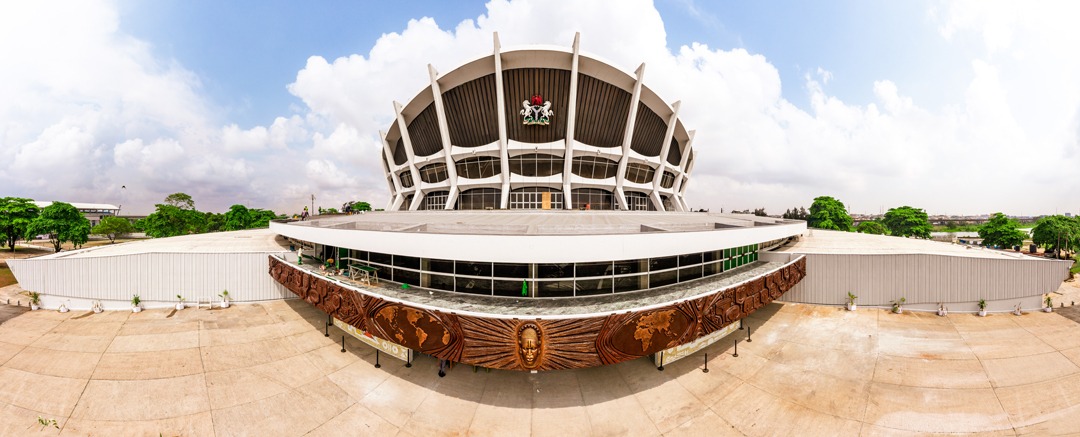
The recent revamp of the National Theatre by SANEF Creatives Limited, a special-purpose vehicle of the Bankers’ Committee, composed of the Central Bank of Nigeria and the Body of Bank CEOs in Nigeria, is a welcome development. The mind-blowing revamp has restored the National Theatre’s glory, putting it back in the spotlight and making it a sight to behold.
The National Theatre is one of Nigeria’s foremost historic monuments and supposedly a creative industry hub that was in ruins for many years. When the project began in April 2022, the estimated cost for the revamp was N21 billion. The Bankers’ Committee explained that revamping the theatre was necessary, given that Nigeria had the potential to earn over $20 billion annually from the creative industry. It is projected that the National Theatre will be able to support skills acquisition and job creation for over one million Nigerians over the next five years.
The image showing the completion of the national monument is a resounding revelation of Nigeria’s readiness to host any global event within the creative industry. The upgrade includes replacement of the entire Heating, Ventilation and Air Conditioning (HVAC) systems, fire safety standards, power, and the water supply and sewage systems. The interior designs were not left out, with the installation of Audio Video Lighting (AVL), a world-stage engineering system, 17 passenger lifts, solar power, new furniture for spaces, and the restoration of artworks, including those on the internal wall panels and the building façade. At best, it could be described as a rebirth!
Having said this, I believe that the journey of the creative sector should go beyond the National Theatre and cascade into the various states to orchestrate a national revival of the sector. In recent years, cultural centres that should showcase the arts of various states have gone moribund. Events that should be held in these locations are moved to privately owned venues because the state governors cannot tolerate the level of dilapidation in these centres.
The art sector has been in a state of comatose for many years. There is a need to reverse this trend. With a limited number of creative people, there are few spaces that offer room for expression across the country. Aside from the spaces in tertiary institutions of learning and the premium theatre locations run by deep-pocketed art connoisseurs, many people in the arts community are struggling to survive.
For the Nigerian creative sector to survive, we need investors who will enjoy benefits akin to the Federal Government Roads Infrastructure Tax Credit policy, and state governments should also put in place modalities for engaging investors in the creative sector. Let the various regions in the state have art spaces, just like Lagos State did during the administration of Governor Akinwumi Ambode. Once there are befitting, affordable spaces, people can be expressive.
A few persons within the creative spaces that have deep pockets, such as Bolanle Austen-Peters’ BAP Film Village, Epe, Lagos State; Kunle Afolayan’s KAP Film Village and Resort, Igbojaye-Komu Itesiwaju, Oyo State; and Ibrahim Chatta’s Film Village and Resorts, also known as Africhatta, Oyo State, have established places that can support the creative industry. Other places such as MUSON Centre, Ebonylife Place, TerraKulture, Freedom Park in Lagos, New Culture Studio and NuStreams in Ibadan, Oyo State, have given life to the creative endeavours of a few creatives. These private venues come at rates that budding artists cannot afford. There is a need to change the rhetoric in the creative circles.
About two months ago, Mr Gboyega Akosile produced a stage play at Terra Kulture. How I wish it were done at the State Arts and Culture Centre. These are the realities that we face together. The state facilities are left to rot while we keep patronising private centres that are optimally managed. It is time to seek home-grown solutions for arts. Many thanks to Lagos State for establishing the Lagos State Infrastructure Agency (LASIAMA); it will be nice to see their Midas touch at the state’s cultural centre too.
Each state government needs to task the tourism, arts, and culture team with the number of performances and festivals they must organise annually. This parastatal must not be docile. There are many people and creative organisations seeking partners to help Africans tell their stories, and it is important for the state government to be involved in all these well-curated events. This will also challenge civil servants and make them realise they must justify their earnings.
Despite advocacy for the revamp of cultural centres across the country, there is a need to integrate sustainability features into the buildings, given the rising cost of fuel. The buildings must have good ventilation and lighting so that rehearsals and other activities can be conducted with ease. We are now in an era where funds must be used judiciously. To optimise any venue now, it must be powered by renewable energy.
To strengthen Nigeria’s creative economy, we need to return to our national and state monuments and facilities. The refurbishment is completed, but putting it to optimal use is the way to go. We need investors in our cultural centres like Ogun State did during the leadership of former Governor Ibikunle Amosun, amongst others. When these facilities come to life, we will be ready for the resurgence of creative arts on a large scale. If the arts must thrive, it has to be a Public-Private Partnership (PPP) driven, and we must all patronise these venues.
Irantiola is a public relations consultant, cultural advocate and creative writer
Leave a Reply