
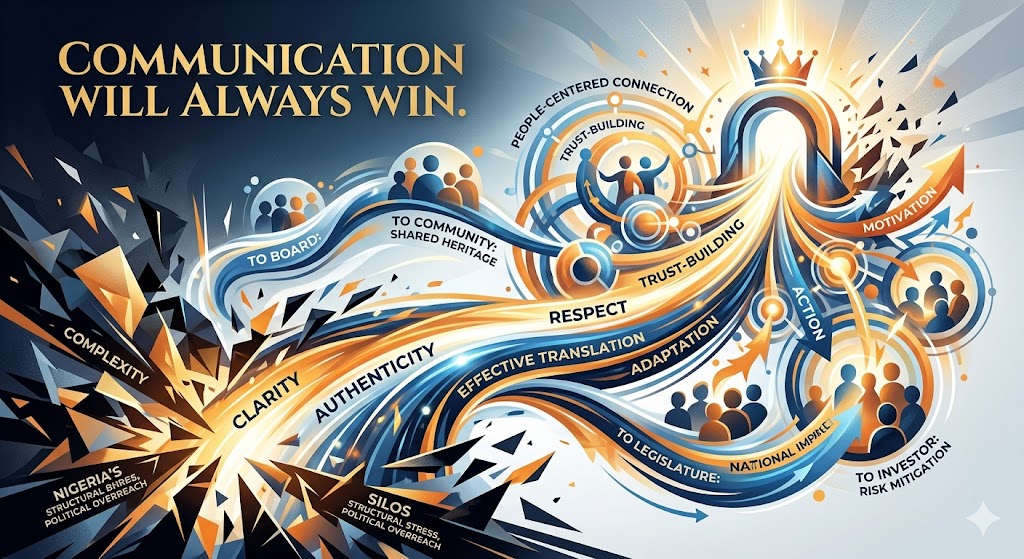
“Communication makes you better in life. Don’t ever underestimate the power of your words. Don’t be lazy in your language.”- Jason Torres
One of the attributes that distinguishes humans from other creatures is the ability to communicate. In business, leadership, governance and even personal relationships, one skill consistently separates those who influence outcomes from those who struggle to be heard is communication.
Communication will always win because people respond not just to information, but to understanding, connection and clarity. The ability to take complex ideas, simplify them, and communicate them in a way that resonates emotionally and intellectually is one of the most powerful skills any individual can possess.
At its core, communication is not merely about speaking or writing. The best communicators are not necessarily the loudest voices in the room; they are the individuals who understand how to engage people authentically and respectfully, even when discussing difficult or uncomfortable issues.
Now that attention spans are shorter and public scepticism is higher, the ability to communicate effectively has become even more critical. Whether explaining economic reforms, corporate restructuring, technological innovation, organizational change or personal decisions, the greatest need of an audience is clarity, honesty and empathy. Others need reassurance and inspiration, while some require urgency, simplicity and patience. Most importantly, they want to feel seen and understood. The communicator who understands these differences will always have greater influence.
Effective communication acts as a bridge. It takes “tough” information and presents it with authenticity and respect without losing meaning or credibility. When you simplify the complex, you aren’t “watering it down”; you are opening the door for others to enter your vision.
This is why communication is not static. In reality, each story must change based on the audience before you.
A financial expert may understand inflation data and fiscal policy, but unless those concepts are translated into what they mean for transportation costs, food prices or household income, the average person may never connect with the message. A business leader may understand strategy and transformation, but unless employees understand how changes affect their future, anxiety and resistance will emerge.
The way a CEO addresses investors will differ from how the same issue is explained to employees, regulators, customers or host communities. Effective communication requires emotional intelligence and audience awareness. It requires understanding not only what people need to hear, but how they need to hear it.
Communication also demands listening. Too often, people think communication is only about delivering messages. In reality, listening is one of the most powerful communication tools available. Listening helps leaders understand concerns before they become crises. It helps organizations adapt their messaging to public sentiment. It builds trust because people naturally gravitate toward those who make them feel heard.
The strongest communicators are adaptable. They seek feedback. They refine their message. They understand that communication is not about talking at people; it is about engaging with people.
This is why communication remains invaluable in both career growth and personal development. Technical competence may open doors, but communication creates opportunities, builds relationships and sustains influence. Professionals who can present ideas clearly, manage difficult conversations, negotiate effectively and inspire confidence often rise faster and lead more successfully.
In personal life, communication strengthens friendships, families and partnerships. It reduces misunderstandings, resolves conflicts and deepens trust. In leadership, it inspires action. In business, it shapes reputation. In governance, it builds legitimacy. In moments of uncertainty, communication becomes the bridge between confusion and clarity.
Communication wins because people matter. And people respond to those who understand, respect, and genuinely connect with them.
In every interaction, whether in boardrooms, classrooms, media interviews, meetings, presentations or everyday conversations, communication remains one of the most powerful tools for winning people, shaping perception and driving meaningful action.
The individuals and organizations that invest time in developing communication skills, adapting their messages and listening intentionally will always stand out.
Communication is a muscle that requires consistent training. As you navigate your career and personal life, you must treat your communication skills as a high-priority investment.
Because in the end, communication is not just about words.
It is about influence, trust and human connection.
Olutayo Irantiola writes #PRQuotes weekly
Leave a Reply