
by Olutayo Irantiola
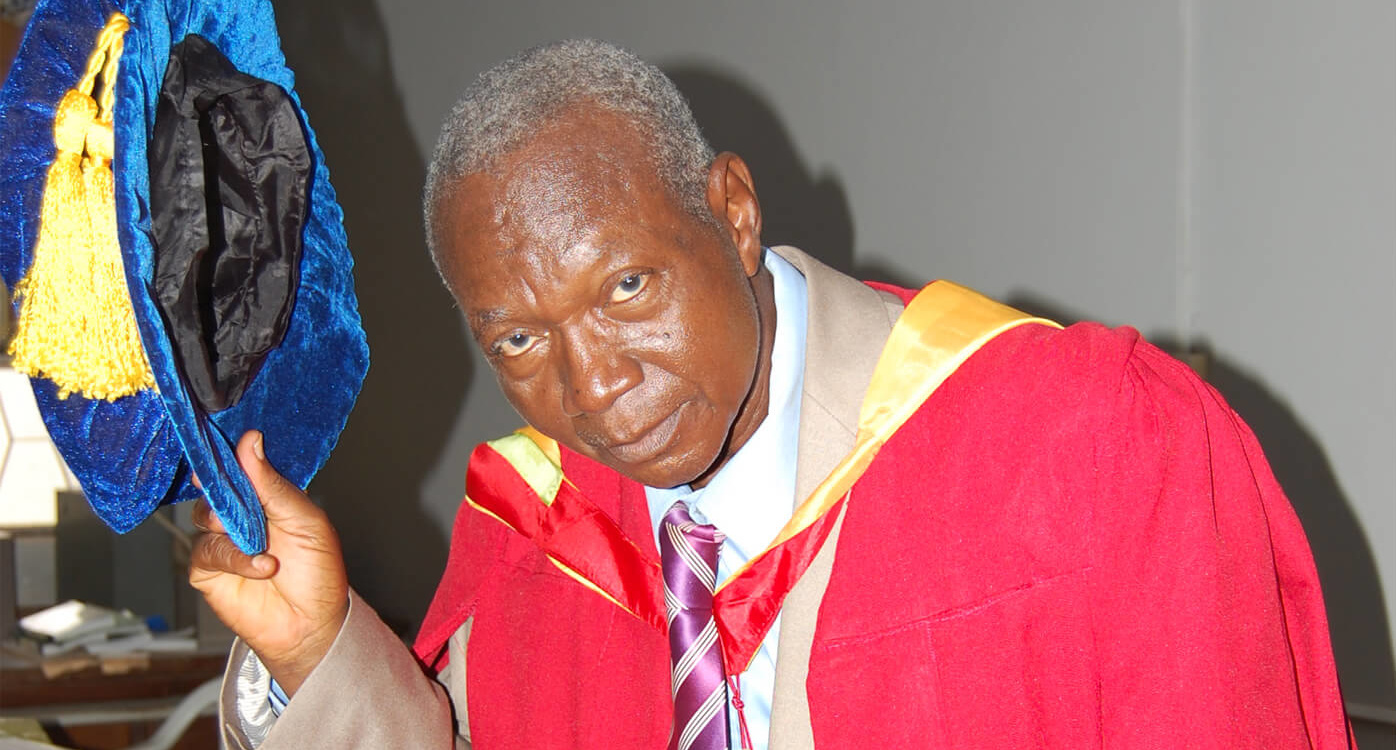
Rev. (Prof.) A.C. Odebode of the Department of Botany, University of Ibadan, belongs to the old stock of academia with the intention of living an impactful life. He hails from the agrarian community, Awe via Oyo town in Oyo State, and either by twist of fate or fortune, he has lived his life around plants and crops. He is on the global map of impactful people as a clergy, a University lecturer and within his sphere of influence.
I have no authoritative fact, but I have the moral right to judge from my relationship with him spanning 20 years that Odebode’s influence would have started through his academic sojourn at different schools from 1963 till 1990. Some of the schools he attended are Awe High School; Baptist Academy, Lagos; Catholic University of America; Howard University and the University of Ibadan, where he was awarded his PhD in Botany.
The maxim of Prof. A.C Odebode for children is akin to the title of the book by S. Truett Cathy: It is better to Build Boys Than to Mend Men. He hunted for boys and drew them closer not with money but by advising them on their academics from secondary school through graduation, and then driving one towards postgraduate studies. I am proud to say that I am one of the beneficiaries of this gesture.
In the same vein, I will want to add that Professor Odebode, by all standards, is a lecturer who wants his students to excel. I have been following the progress of one of his postgraduate students who will be completing his PhD soon. He has a large heart for anyone who is willing to open his hands, and he would assist the person to soar within and above his confines. This shows that his only joy is to see people succeed.
As a clergy, I knew of his exploits when he went to the University of Dar es Salaam, Tanzania, on Sabbatical. He found out that the Baptist denomination is not visible in the country. He volunteered to be a missionary, and he returned to Nigeria with a student for the Nigerian Baptist Theological Seminary, Ogbomoso to get trained and continue to water the seed he planted.
Aside from his other role in his local assembly church, he was once the chaplain of the Air Force Comprehensive School, Iyana-Offa, Ibadan, after Ajegunle Baptist Church, Agbowo, under the leadership of Revd Dr Emmanuel Oyewole Oyekan, built a chapel there.
Professor A.C. Odebode has further demonstrated his selflessness through his topic of preference for his inaugural lecture taking place today (30th June 2016) at the University of Ibadan with the title, ‘Integrated Plant Disease Management: A panacea for food insecurity’. There is a drive in him to ensure that man’s existence is not hampered by food insecurity. This multidisciplinary title, which cuts across Botany, Agriculture, Human Nutrition, Geography, and Soil Science, amongst others, is a reflection of his heart and the call to academia to generate solutions that will further improve the quality of life.
According to the United Nations, Food security
• Agriculture is the single largest employer in the world, providing livelihoods for 40 per cent of today’s global population. It is the largest source of income and jobs for poor rural households.
• 500 million small farms worldwide, most still rainfed, provide up to 80 per cent of food consumed in a large part of the developing world. Investing in smallholder women and men is an important way to increase food security and nutrition for the poorest, as well as food production for local and global markets.
• Since the 1900s, some 75 per cent of crop diversity has been lost from farmers’ fields. Better use of agricultural biodiversity can contribute to more nutritious diets, enhanced livelihoods for farming communities and more resilient and sustainable farming systems.
• If women farmers had the same access to resources as men, the number of hungry in the world could be reduced by up to 150 million.
• 1.4 billion people have no access to electricity worldwide – most of whom live in rural areas of the developing world. Energy poverty in many regions is a fundamental barrier to reducing hunger and ensuring that the world can produce enough food to meet future demand.
The academic pursuit of Professor A.C. Odebode has just opened up a new climate of research. As an expert in different areas such as Mycorrhizal, Plant Genetics and Pathogen Interaction; Post Harvest Pathology; Biocontrol through Antagonistic Microorganism, Use of Botanical/ Biofungicide, Virology and General Plant pathology and Mycology. All these fields have been consolidated into today’s expository inaugural lecture.
I look forward to the Odebode theories, Odebode-ism, Odebode-logy and Odebode-cide that will be referred to be scholars globally.
Leave a Reply