
C-Suite Executives, Product Development, and IT often assume that communication is not needed at the conception of a new product or project, but rather close to the launch, and they will add all the fanfare and earn the accolades for a successful event.
However, when an organisation finds itself in a crisis or crisis mode, the Communications or Public Relations team is among the first to feel the pressure.
As I have mentioned before, there is an element of Customer Relations, or Customer Service, in Public Relations. The phones start ringing. Media enquiries come in. Stakeholders demand answers. Social media begins to amplify the issue. Management asks for a statement, a press release, a press conference or a response. Then, the communications team gets to work.
But there is an important question we sometimes fail to ask- What is the actual business problem behind the crisis?
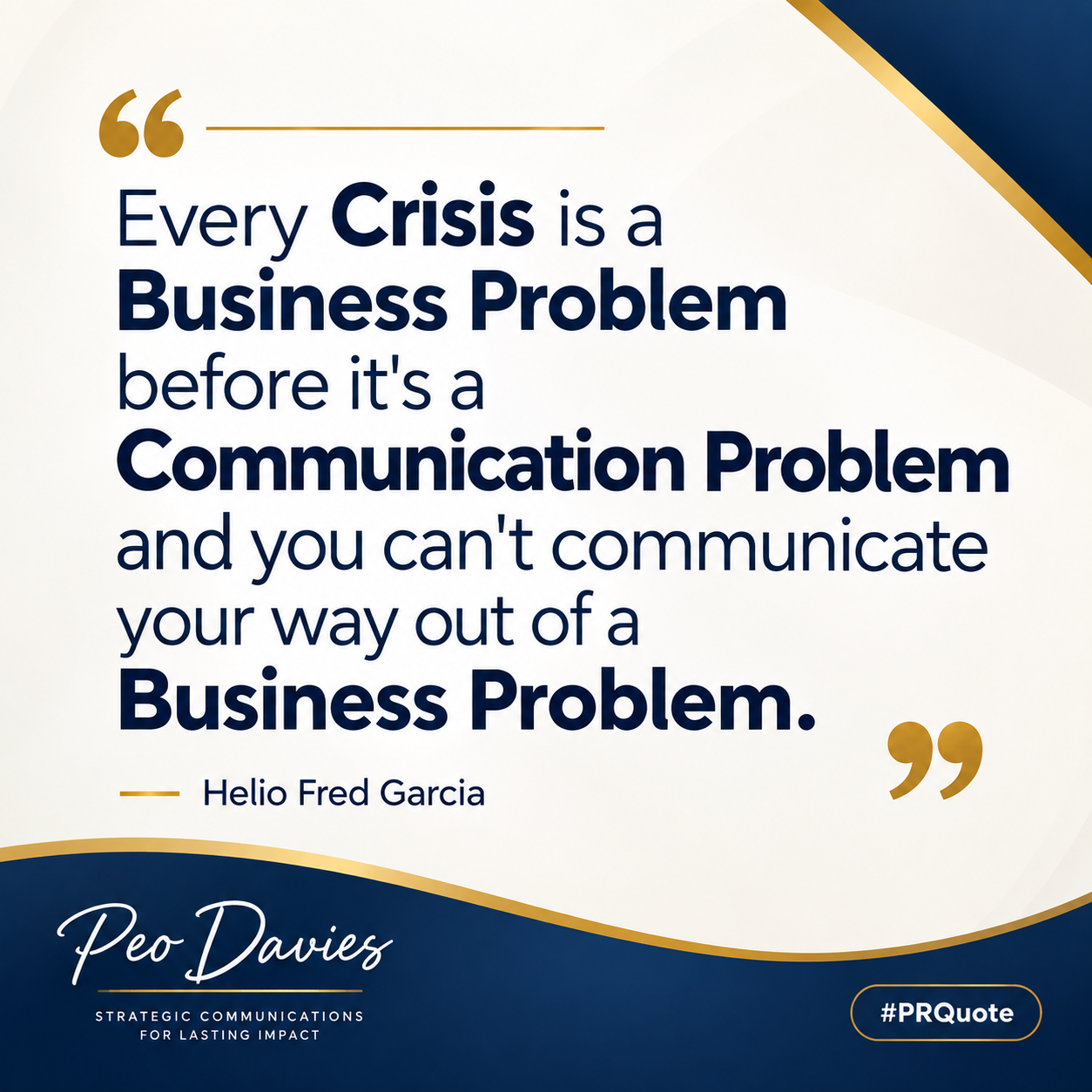
As Helio Fred Garcia puts it: “Every crisis is a business problem before it’s a communication problem, and you can’t communicate your way out of a business problem.”
If a product fails User Acceptance Testing (UAT) and the launch deadline is approaching, it is not necessary to proceed with deployment until it is resolved. Anything that concerns stakeholders should be finalised before being communicated or released.
Another interesting one, companies listed on the Stock Exchange sometimes release their results via Corporate Disclosure without preparing a news release with their preferred slant for the media. The media picks the document and interprets it as they deem fit. That’s when the consultant or PR team are now told to manage the situation.
It is not merely communication; we must keep in mind that a press release cannot repair a defective product, nor can a press conference reverse a poor business decision.
A social media campaign cannot erase a genuine customer grievance, and a carefully crafted message cannot permanently conceal an unresolved problem.
Communication can explain, clarify, reassure and rebuild trust, but it cannot substitute for corrective action.
Too often, the communications team is brought into a crisis only after the problem has escalated. The concerned business unit provides the facts, the communications team drafts a statement, management reviews it, and the organisation goes public.
But if the underlying problem remains unresolved, communication becomes little more than a temporary response.
This is why crisis preparedness must go beyond having a crisis communication plan.
Organisations need to understand their operational vulnerabilities, identify potential issues early, establish escalation mechanisms and ensure that communications professionals have a seat at the table when important business decisions are being made.
The PR professional should not only be asking: “What should we say?”
The more important questions are:
“What happened?”
“Why did it happen?”
“Who has been affected?”
“What is the organisation doing about it?”
“What needs to change?”
Only then can communication effectively support the response.
When the public becomes aware of a business problem, they are rarely interested only in the organisation’s statement. They want to know whether the organisation understands the problem, accepts responsibility where appropriate, is taking meaningful action and can be trusted to prevent a recurrence.
That is where communication becomes strategic.
So, when the next crisis comes, don’t just blame the Communications team. All the business owners, management, functions, either legal, operations, customer service, HR, risk or communications teams are brought to the same table. Solve the business problem first. Then communicate it clearly, honestly and responsibly.
When the problem persists, no amount of communication can make it disappear!
Let’s get it right from the onset!
Olutayo Irantiola writes #PRQuotes weekly
Leave a Reply